























Yes. In Great Britain, employers must provide drinking water at work, and enough of it for everyone there. Regulation 22 of the Workplace (Health, Safety and Welfare) Regulations 1992 asks for an adequate supply of wholesome drinking water. The water has to be easy to get to, and there must be cups unless it comes from a drinking fountain. Northern Ireland has its own regulations with the same duty.
This guide explains the rules on drinking water at work in plain English: what the law says, what HSE’s guidance adds, and where a water cooler fits in. It’s general information, not legal advice. For your own workplace, check HSE’s guidance or take advice.
What does the law say about drinking water at work?
Regulation 22 of the Workplace (Health, Safety and Welfare) Regulations 1992 sets out what employers must provide. In practice, it means:
| The law asks for | What it means |
|---|---|
| An adequate supply | Enough drinking water for everyone at work. There’s no set number of litres per person |
| Wholesome water | Clean and safe to drink |
| Readily accessible | In suitable places that people can get to easily |
| Signs where needed | Clearly marked where health or safety calls for it, for example where some taps aren’t safe to drink from |
| Cups | Enough suitable cups, unless the water comes from a jet people can drink from, like a drinking fountain |
The regulation doesn’t set a number of water points per employee either. It asks for a supply that is adequate for the people in your workplace.
Which law applies where in the UK?
The 1992 Regulations cover workplaces in England, Scotland and Wales. Northern Ireland and construction sites have their own rules, with the same basic duty.
| Workplace | Law that applies |
|---|---|
| England, Scotland and Wales | Workplace (Health, Safety and Welfare) Regulations 1992, regulation 22 |
| Northern Ireland | Workplace (Health, Safety and Welfare) Regulations (Northern Ireland) 1993 |
| Construction sites in Great Britain | Construction (Design and Management) Regulations 2015, schedule 2 |
What does HSE’s guidance say about drinking water?
HSE’s Approved Code of Practice, Workplace health, safety and welfare (L24), explains how to meet the rule. It says:
- Drinking water should normally come directly from a mains supply
- A tank or cistern used for drinking water should be well covered, kept clean, and tested and disinfected as necessary
- Refillable containers, if they have to be used, should be enclosed and refilled at least once a day
- Drinking water taps shouldn’t be put where the water could be contaminated and, as far as is reasonably practicable, not in toilets
- Cups should be provided unless the water comes from a drinking fountain, with somewhere nearby to wash cups that aren’t disposable
- Bottled water and water dispensing systems may be provided as a supplementary source of drinking water
Do construction sites have to provide drinking water?
Yes, under different rules. The 1992 Regulations don’t cover a construction site where the only work going on is construction. Schedule 2 of the Construction (Design and Management) Regulations 2015 applies instead. It sets the same duties: an adequate supply of wholesome drinking water in accessible places, signs where needed, and cups unless there’s a drinking jet.
We supply water dispensers for film, TV and construction sites, with short-term contracts available.
Can my employer stop me drinking water at work?
Your employer has to provide drinking water that you can get to easily, so you should always be able to get a drink at work. The law doesn’t give you a right to drink anywhere you like, though. An employer can limit where people eat and drink, for example away from a food production line or a lab, as long as there’s drinking water in a suitable place you can reach.
If you’re worried about access to water at work, raise it with your manager or health and safety rep first.
Can a water cooler meet the drinking water rules?
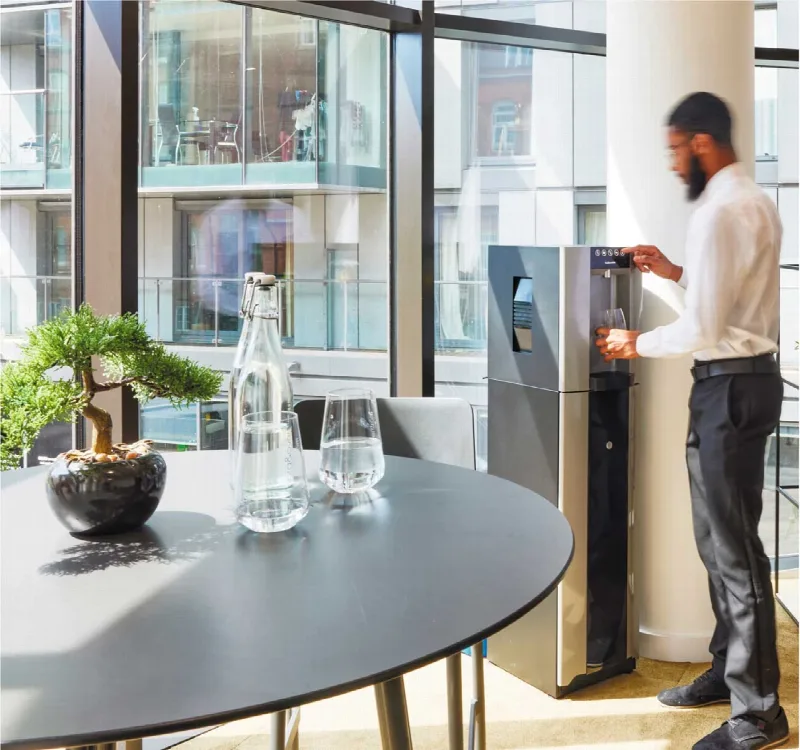
A water cooler is an easy way to give staff chilled drinking water, but HSE’s code treats it as a supplementary source. Drinking water should normally come directly from the mains, so in most workplaces a cooler sits alongside a mains drinking water tap rather than replacing it.
A mains-fed cooler draws its water from the mains supply, then filters and chills it. A bottled cooler gives chilled spring water from sealed bottles, and is handy where there’s no mains water nearby, such as temporary sites and events. Not sure which suits you? Read our guide to how water coolers work.
Whichever type you choose, provide cups or make sure people have their own. We can supply recyclable or biodegradable cups with your cooler.
How do you keep drinking water at work safe?
The law asks for wholesome water, so the supply has to stay clean. For a water cooler, that means regular sanitising and, on a mains-fed cooler, regular filter changes.
The Water Dispenser and Hydration Association (WHA) sets guidelines for this. When you rent from us, our engineers sanitise your cooler to WHA standards and change mains-fed filters every 6 months. Between visits, our water cooler maintenance tips cover everyday cleaning.
See our office water coolers for workplace options. Our water dispenser rental includes installation, regular sanitising and repairs, and we cover the whole UK from local teams in Exeter, Plymouth, Swindon, London, Portsmouth, Walsall and Scotland.
FAQs
Is it a legal requirement to provide drinking water at work?
Yes. Regulation 22 of the Workplace (Health, Safety and Welfare) Regulations 1992 requires an adequate supply of wholesome drinking water for everyone at work in Great Britain. Northern Ireland has an equivalent rule.
Can employers just provide tap water?
Yes. Mains tap water is the normal source in HSE’s code of practice. The tap should be easy to reach, somewhere the water won’t be contaminated and, as far as is reasonably practicable, not in a toilet.
Do employers have to provide bottled water?
No. HSE’s code says drinking water should normally come from the mains. Bottled water and water coolers can be added as a supplementary source.
Do employers have to provide cups?
Yes. There must be enough suitable cups or other drinking vessels, unless the water comes from a jet people can drink from easily, such as a drinking fountain.
Who enforces the rules on drinking water at work?
Either HSE or your local council’s environmental health team, depending on the type of workplace. Councils usually cover places such as offices, shops, hotels and restaurants. HSE covers places such as factories and building sites.
